Challenges in combating counterfeit products and collaboration in Intellectual Property Law enforcement

 Counterfeit products remain one of the most pressing challenges for industries worldwide, including Indonesia. These illicit goods not only harm intellectual property (IP) rights holders and legitimate businesses but also put consumers at risk, hinder innovation, and weaken economic growth.
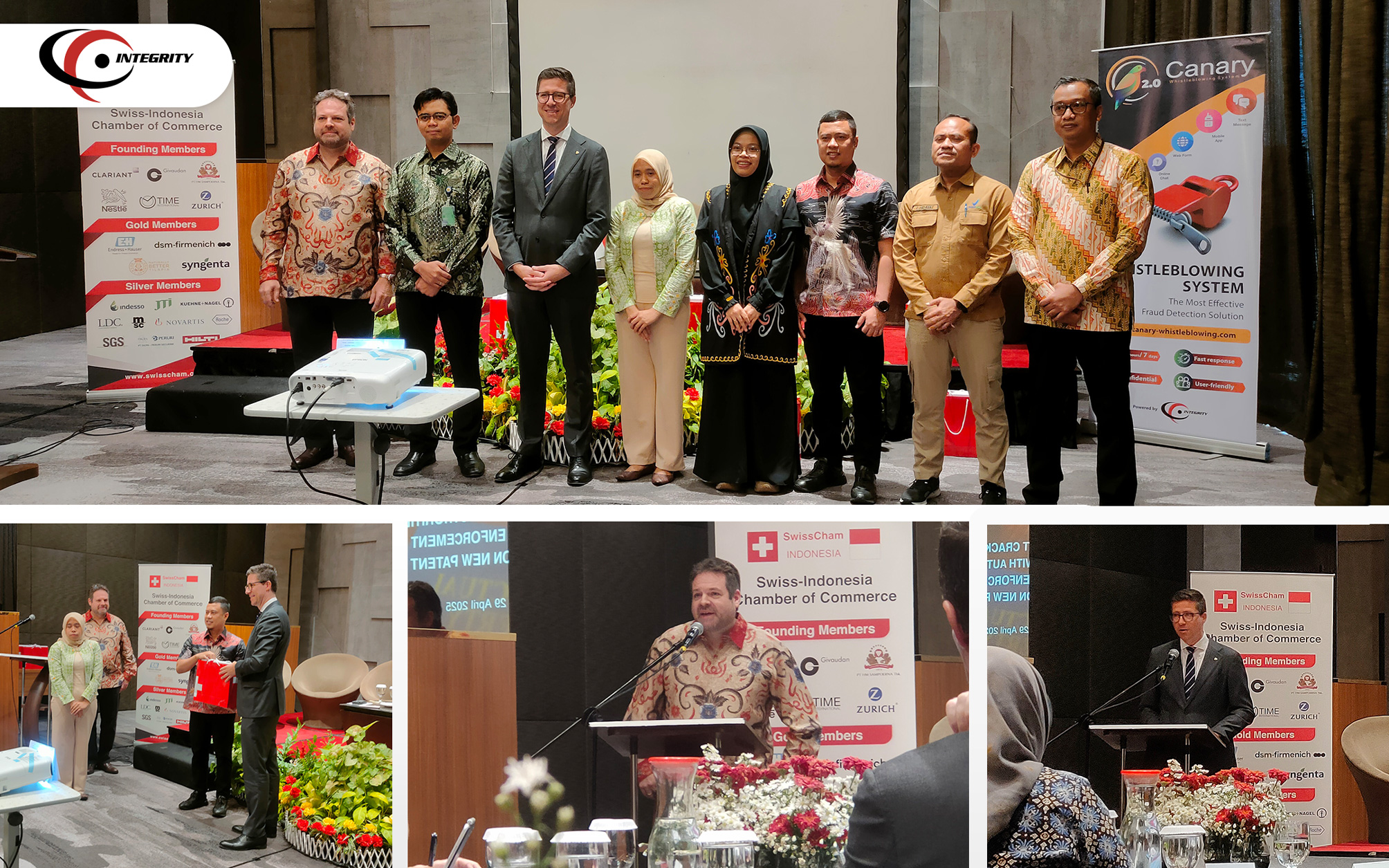
In response, SwissCham Indonesia, through its Ease of Doing Business Sector Group, organized a discussion titled “Counterfeit Crackdown: Partnering with Government Authorities for Strong Enforcement & Socialization of New Patent Law.” The event was held on Tuesday, April 29, in collaboration with the Directorate General of Intellectual Property (DGIP) and involved the Intellectual Property Task Force. This task force includes representatives from the National Police, the Food and Drug Monitoring Agency (BPOM), the Ministry of Communication and Informatics (KOMDIGI), Customs, and the Attorney General’s Office as speakers.
In his opening remarks, Mathias Domenig, Deputy Head of Mission at the Swiss Embassy, expressed appreciation for the Indonesian government’s commitment to strengthening IP law enforcement. “Switzerland has been ranked the most innovative country for 14 consecutive years according to the Global Innovation Index. Strong enforcement of intellectual property rights not only supports innovation but also enhances a country’s competitiveness and global reputation,” he stated.
The discussion was moderated by Edouard Helfand, Head of the Ease of Doing Business Sector at SwissCham and Managing Director of PT Integrity Indonesia. The session featured insights and presentations from various participating agencies.
Several key aspects of IP law enforcement in Indonesia were addressed, with a strong emphasis on monitoring both physical and digital markets, especially in tackling the rising trend of online IP violations.
Participants highlighted the importance of rapid and coordinated enforcement strategies, including online patrols, the seizure of counterfeit goods at border points, and the regulation of illegal online content, as critical tools in the fight against counterfeiting.
“Based on our data since 2016, there have been approximately 9.4 million flagged negative contents, with 7 million of them originating from websites. IP violations are among the most frequently reported cases, with around 29,000 reports,” said Yosie Sesbania Gewap, Head of the Internet Content Management Complaint Team.
Commissioner Andry Ilyas of the Indonesian National Police pointed out that reporting IP violations presents distinct challenges compared to other criminal offenses. “One of the main challenges is verifying the legal standing of the complainant. Since IP violations are complaint-based offenses, we must ensure the complainant has legal authority, and this verification is done by DGIP,” he explained.
He provided an example: “If Company A is acting on behalf of a trademark owner from China, the power of attorney submitted must meet DGIP’s specific requirements. In one case, a complaint was delayed because the document submitted was a statement letter rather than a proper power of attorney.”
Physical enforcement was also a key point of discussion. Customs officials actively monitor trademarks and copyrights at ports, but this requires prior cooperation from companies.
“Customs can take action, but companies must first register their IP through a process called recordation. One of the key requirements is that the company must be legally incorporated in Indonesia,” said R. Tarto Sudarsono, Head of the Transnational Crime Section.
In a separate session, he also elaborated on the monitoring of goods carried by individuals, particularly in light of the growing trend of personal shopping services (‘jastip’). This, he noted, follows a different protocol.
“For instance, in drug-related monitoring, we always coordinate with BPOM. When passengers carry medication, Customs focuses on the accompanying doctor’s prescription,” he said.
Ultimately, the event underscored the importance of cross-agency collaboration and a unified enforcement approach. A strong and effective anti-counterfeiting strategy is vital to protect IP rights, ensure fair competition, and cultivate a sustainable and innovation-driven business environment in Indonesia.
Through this dialogue, stakeholders are expected to develop strategic initiatives to strengthen enforcement, improve understanding of the latest regulations, especially the newly socialized Patent Law and support a healthier business climate.