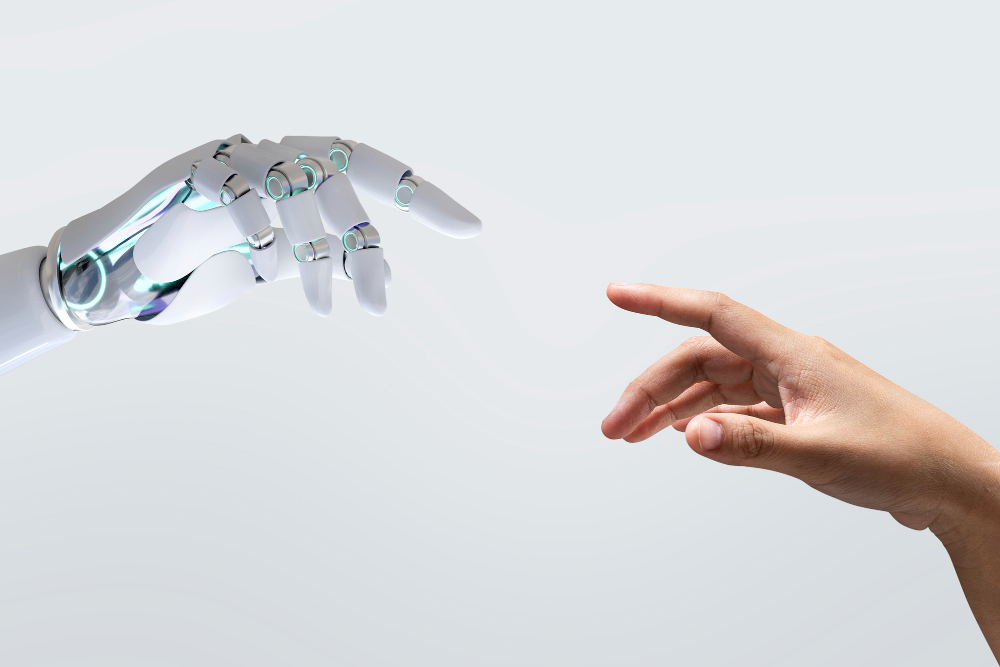
The future of employment background screening: AI vs human


Before the digital era, compliance activities were often associated with long and tedious processes such as piles of paperwork, manual audits that could take months, and slow investigations. For instance, employment background screening once took weeks to complete before the final hiring confirmation.
Today, artificial intelligence (AI), through applicant tracking systems (ATS), can scan and rank thousands of CVs based on keywords, skill relevance, and company-defined criteria. Thanks to this technology, routine tasks such as CV screening can now be completed in seconds. AI is not merely a tool; it serves as the eyes and brain capable of processing massive volumes of data within a short time.
In many cases, technology has enabled compliance professionals to achieve unprecedented efficiency. Big data analysis is faster, identity verification is simpler, and potential risks can be detected earlier.
Several studies show that more companies are integrating AI into their recruitment systems. One study found that AI excels in analyzing large data sets, improving recruitment speed by up to 70% and reducing hiring costs by 30%.
However, as AI adoption grows, a critical question arises: will this “automation” technology completely replace the human role in compliance, specifically in employment background screening?
Behind the algorithm
AI operates based on data provided by humans. It can analyze, predict, and classify rapidly. Yet despite its evolving capabilities, AI still struggles to understand complex human contexts or provide justifications that consider real-life values and circumstances.
For example, an AI-based employment background check system might flag a candidate as “high risk” simply due to a three-year employment gap. However, the system does not recognize that the gap could have resulted from personal reasons such as caring for a sick parent or pursuing self-development outside formal education.
Moreover, AI screening systems can misinterpret data. Reuters once reported that Amazon’s recruitment algorithm was biased against female applicants. This was caused by most resumes received over the previous decade coming from male applicants, which led to the algorithm favoring male applicants and treating the word “women” as a negative indicator.
Misinterpretations can also occur in simpler contexts. For instance, an AI system might flag a candidate as a “job hopper” for changing jobs three or four times within two years. However, upon human review, it may turn out that the candidate had worked at startups that shut down due to restructuring or the pandemic. In this case, while AI perceives the candidate as a risk, a human analyst might instead recognize valuable traits such as adaptability and resilience, qualities that are crucial in today’s work environment.
Also read:
HR background check: a guide for job seekers and recruitment teams
Reference Check: Digging The Truth of Candidate’s Past Performance
Human and AI collaboration
AI can process data rapidly, but human judgment remains essential for evaluating context and accuracy behind the data. At the same time, humans also have limitations. Therefore, collaboration between machine intelligence and human discernment is key to achieving accurate and objective results.
In practice, human involvement remains critical in:
- Context analysis. Understanding the reasons behind findings that appear as red flags.
- Data source validation. Ensuring that collected or used information comes from legal and reliable sources.
- Legal and ethical compliance. Ensuring the screening process adheres to data protection laws, anti-discrimination policies, and other ethical standards.
- Final review. Making recommendations based on contextual understanding, not merely on data or risk labels.
The future of employment background screening
While AI can efficiently handle repetitive and administrative tasks, humans are still required to interpret results, provide context, and make strategic decisions. This coexistence between AI and human intelligence offers the most effective and efficient solution for the future of the background screening industry.
The collaboration between humans and AI delivers distinct advantages such as:
- Higher accuracy. Every AI-generated result is verified by human reviewers.
- Enhanced legal compliance. Human oversight ensures full adherence to local and international regulations.
- Fairer and wiser decisions for both candidates and employers.
Interestingly, the same study shows that several global companies including Siemens, Kaiser Permanente, Unilever, and Hilton have improved their hiring quality and efficiency through AI-human collaboration. AI handles the initial screening, while humans retain control over final decision-making. This collaborative approach not only speeds up recruitment but also ensures fairness, transparency, and alignment with organizational context.
Ultimately, both machine intelligence and human wisdom are indispensable in building a modern, accurate, and integrity-driven employment background screening process.